Community & Partnerships
Community & Partnerships
Where the Land Remembers: Reflections from Our Diablo Canyon VIP Tour
|
8
min read

The Diablo Canyon Nuclear Power Plant sits on 14 miles of California's Central Coast shoreline. For many people, it's a power plant and a policy debate. For yak titʸu titʸu yak tiłhini (ytt) Northern Chumash Tribe, it is homeland. The relationship between the Tribe and the plant runs through generations of families, workers, and land that has changed hands without Tribal consent.
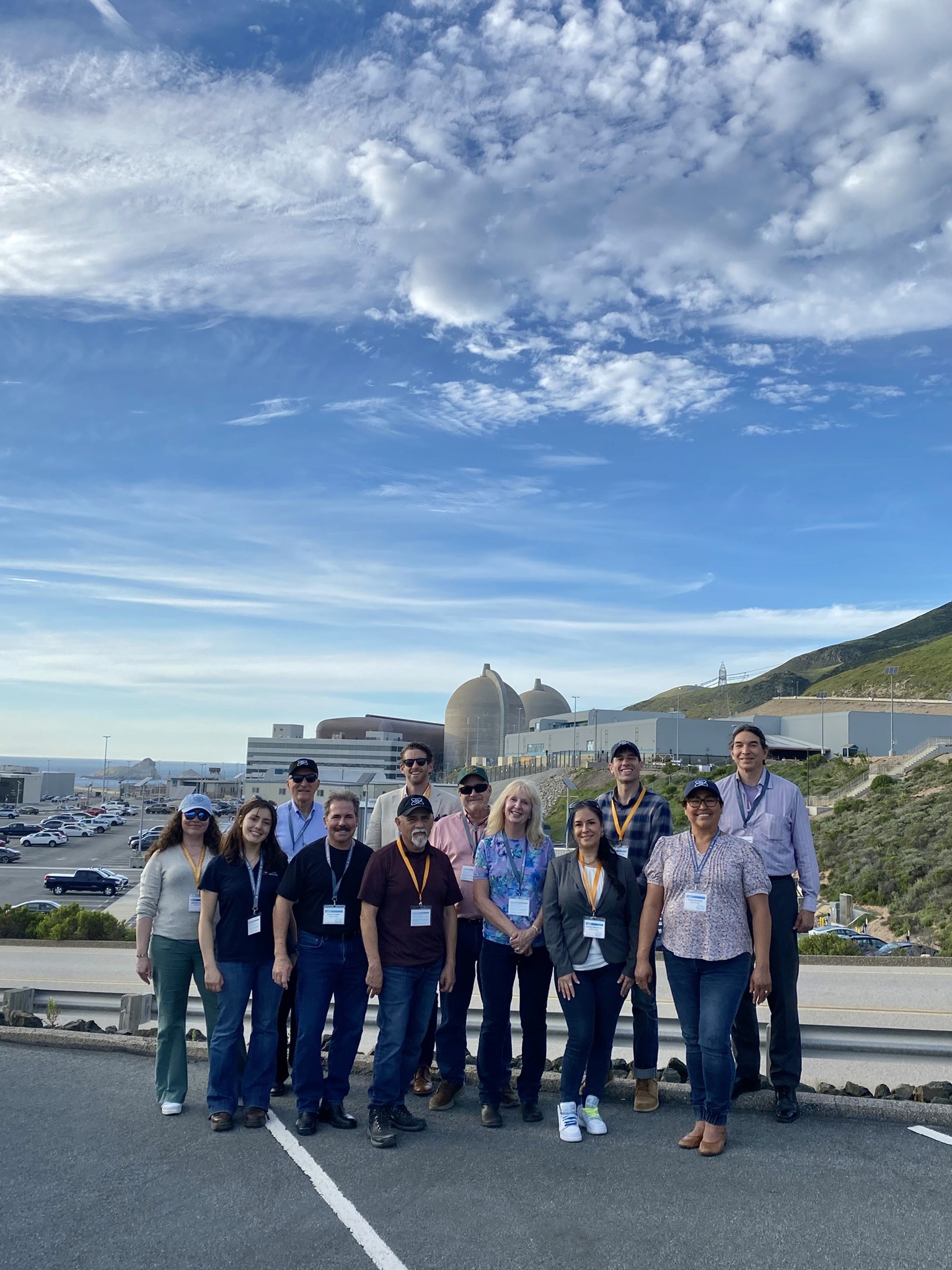
That history is why our August VIP tour of Diablo Canyon (DCPP) mattered. Tribal leaders, policymakers, and nuclear industry partners walked the site together to look at what it means to share land, power, and a clean energy future.
Who Joined Us
The group came from across California, Washington State, and the nuclear innovation community:
Kelsey Shaffer and Abigail Harrison, ytt Northern Chumash Nonprofit
Leah Redstar Messmer and Jeremy Pieper, Guidiville Rancheria of California
Pi-Ta Pitt, Michael Vasquez, and Robert Munoa, Pechanga Band of Indians
Representative Chris Stearns, Washington State House of Representatives
Emily Nichols, Gateway for Accelerated Innovation in Nuclear (GAIN)
Each person brought a different view: Tribal leadership, state policy, federal innovation, and the lived experience of ytt people on this land.
A Complex History
ytt Tribe's relationship with Diablo Canyon is complicated. Because the Tribe lacks federal recognition, the plant was built without Tribal consent, on the Tribe's ancestral village site of canu. That history is part of the story and shouldn't be glossed over.
The relationship also has other layers. Over the decades, many ytt Tribal members have worked at the plant, including members of the family of Native Nuclear Founder and CEO Scott Lathrop. In the 1980s, Scott himself inspected the plant's construction. For these families, Diablo Canyon has been a workplace and a source of stable careers, as well as a presence on their ancestral land.
Over time, Tribal members have also seen something they didn't expect: the land around the plant has been well cared for. With limited public access and consistent protection, the coastline has stayed largely intact. Diablo Canyon became an unintentional but responsible steward of the land.
That realization helped create Native Nuclear. Starting in 2018, Scott served on the DCPP Decommissioning Engagement Panel. Through that work, he saw how much the plant had given the region over roughly 35 years, both environmentally and economically. Those benefits raised a question that still drives our work: what would nuclear energy look like if Native communities helped shape it from the start?
What We Heard on the Tour
A relationship that keeps changing
Conversations between PG&E and ytt representatives made clear that the relationship between the two is still developing. In recent years, ytt Tribe has worked more closely with the utility to access Tribal homelands along the 14 miles of coastline PG&E protects.
ytt representatives pointed out that if the state controlled these lands, getting approval for Tribal cultural practices there would likely be much harder. They also compared the PG&E lands with nearby Montaña de Oro State Park and noted that the protected utility lands are far better preserved and respected.
Land back, and the realities in the meantime
ytt Tribe's first preference is to own the land. However, representatives also noted that the state doesn't have the funding to take on, protect, or restore more land. For now, private ownership by an entity like PG&E has served the land better than the alternatives, while the Tribe keeps pursuing land back in other ways.
In an ideal world, the Tribe would own the land, and PG&E would continue as steward. The plant would keep producing power, possibly add capacity, and public access would stay limited. Current policy is moving the other way: toward more public access, without making Tribal ownership more feasible.
This tension deserves attention. Decisions about Diablo Canyon's future are also decisions about who gets to care for this coastline and how.
The scale of clean power
Seeing the plant up close puts its size in perspective. Diablo Canyon supplies about 9% of California's total electricity, delivering reliable, carbon-free power to more than 4 million Californians. No other sources in the state provide this much steady, clean power.
Thinking in Generations
One of the richest conversations was about time. Many Native communities share a practice of multi-generational thinking, often called Seven Generation thinking, or weighing how today's decisions will affect people seven generations from now.
That perspective fits nuclear energy well, as a nuclear energy plant is a long-term commitment. Its benefits, responsibilities, and effects on the land last for decades. For many Tribal leaders, that kind of timeline feels familiar.
The group also showed that long-term thinking doesn't mean slow action. Tribal leaders were most interested in energy projects with faster timelines, such as small modular reactors (SMRs) and microreactors. These smaller, factory-built reactors can be deployed faster and at a smaller scale. That could put energy sovereignty within closer reach for Tribal nations looking to power their own communities.
Lessons for What Comes Next
ytt Tribe's history with Diablo Canyon offers practical lessons for future nuclear development:
Collaboration and partnership from day one. Diablo Canyon was built without Tribal consent. Future projects don't have to repeat that.
Stewardship is a communal responsibility. The coastline shows that responsible land management and Tribal access can work together.
Economic benefits should reach Tribal communities. Stable, skilled careers have mattered to ytt families for generations.
Tribal ownership should be on the table. Access agreements help, but they don't replace sovereignty.
Building the Future Together: The Native Nuclear Energy Alliance
The lessons shared above are the basis of the Native Nuclear Energy Alliance (NNEA). The Alliance is an initiative of Native Nuclear that builds partnerships between Tribal entities, industry representatives and developers, educational institutions, and federal and state agencies. Together, these partners shape a community-led nuclear energy future that benefits everyone involved.
NNEA membership offers:
Networking with Tribal leaders, developers, and policymakers
Nuclear energy education that makes a technical field accessible
Matchmaking opportunities for anyone invested in next-generation nuclear development, with community benefits and Tribal sovereignty at the center
Diablo Canyon's story began without Tribal consent or collaboration. We believe the next chapter of nuclear energy can start with it.
Interested in joining the Native Nuclear Energy Alliance? Contact our team to learn more about membership.
We extend our sincere gratitude to PG&E, ytt Northern Chumash Nonprofit, and every guest who joined us at Diablo Canyon this September.
###
While we advocate for greater Native representation in nuclear energy, we do not represent, nor do we speak on behalf of, any specific Tribe.
Native Nuclear is a registered 501(c)(3) nonprofit. To learn more about our team or support our work, visit nativenuclear.org.
Subscribe To Our Newsletter
Subscribe To Our Newsletter
Get our latest updates delivered directly to your inbox!
Share It On:
Related Articles
Related Articles
Connecting Native Voices to the Nuclear Energy Industry
Join our email list for monthly updates
While we advocate for greater Native representation in nuclear energy, we do not represent, nor do we speak on behalf of, any specific Tribe.
@NATIVENUCLEAR 2025
|
Registered 501(c)(3)
Connecting Native Voices to the Nuclear Energy Industry
Join our email list for monthly updates
While we advocate for greater Native representation in nuclear energy, we do not represent, nor do we speak on behalf of, any specific Tribe.
@NATIVENUCLEAR 2025
Registered 501(c)(3)